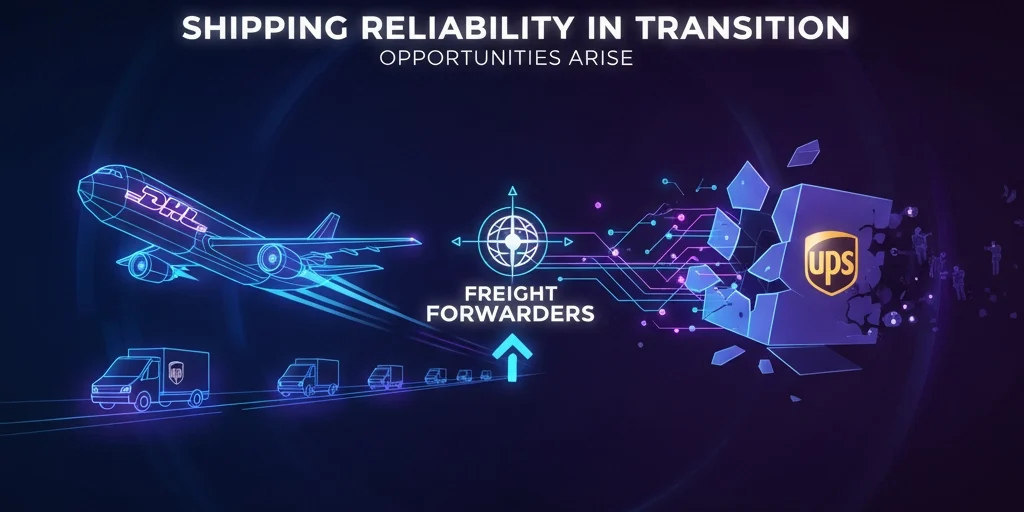
The shipping industry is experiencing one of its most significant transformations in decades. Major carriers like UPS and DHL are implementing massive restructuring plans that are reshaping the logistics landscape: and creating unprecedented opportunities for freight forwarders who know how to navigate this shifting terrain.
The Scale of Carrier Restructuring
UPS has announced one of the most aggressive operational overhauls in its history. The company is eliminating 20,000 jobs and closing 73 facilities by June 2025 as part of its "Network of the Future" initiative. This isn't just cost-cutting: it's a complete reimagining of how they operate.
Meanwhile, DHL is pursuing its own $1.1 billion cost-reduction strategy, which includes severing partnerships with third-party cargo airlines and streamlining operations across their network. These moves are designed to boost long-term efficiency, but they're creating immediate challenges for shippers who depend on consistent service levels.

The numbers tell the story: UPS is slashing its Amazon volume by over 50% by mid-2026, while DHL's international parcel volumes have already dropped 7.1%. When major carriers reduce capacity and workforce simultaneously, it creates ripple effects throughout the entire supply chain.
Why Service Reliability is Taking a Hit
During major restructuring phases, even the most established carriers face operational vulnerabilities. Here's what's happening behind the scenes:
Capacity Constraints: As UPS closes facilities and reduces workforce, available capacity becomes more limited. This is particularly problematic for businesses that rely on consistent shipping windows or have urgent delivery requirements.
Integration Risks: Massive operational changes always carry execution risks. When carriers are simultaneously optimizing routes, closing facilities, and implementing new systems, the potential for service disruptions increases significantly.
Workforce Transitions: The loss of experienced personnel: 20,000 jobs at UPS alone: means institutional knowledge walks out the door. New automated systems and streamlined processes take time to reach the reliability levels of established operations.
Volume Reallocation: UPS's decision to dramatically reduce Amazon shipments means reallocating that capacity across other customers. During this transition, service levels for existing clients can become inconsistent as the network adjusts.
The Automation Push and Its Short-Term Challenges
UPS is betting heavily on automation, with 64% of its volume now moving through automated hubs. This strategic shift is expected to generate $3.5 billion in savings: impressive numbers that highlight the long-term benefits of their approach.
But automation rollouts aren't seamless. During implementation phases, even sophisticated automated systems can experience growing pains that affect delivery times and tracking accuracy. For businesses that can't afford shipping delays, this transition period creates real operational risks.

DHL's restructuring focuses more on cost reduction and partnership optimization, but the result is similar: short-term service variability as they implement new operational models.
How This Creates Opportunities for Freight Forwarders
The carrier restructuring landscape is creating significant openings for freight forwarders who can provide what major carriers temporarily can't: reliability, flexibility, and personalized service.
Market Gap Opportunities
The third-party logistics sector is projected to reach $336.64 billion in 2025, driven partly by businesses seeking alternatives to traditional carrier relationships. When major carriers prioritize efficiency over volume, freight forwarders can step in to serve clients who need:
- Consistent service levels during carrier transitions
- Alternative routing options when primary carriers face capacity constraints
- Specialized handling for shipments that don't fit automated processing models
- Dedicated account management and responsive customer service
Specialized Segment Capture
UPS's move away from Amazon volume and focus on automation creates opportunities in several key areas:
Small and Medium Business Solutions: As major carriers optimize for large-volume automated processing, SMBs often get deprioritized. Freight forwarders can provide more attentive service to this segment.
Complex International Shipments: DHL's capacity constraints in international parcels create openings for forwarders specializing in cross-border logistics and customs management.
High-Value and Specialized Cargo: Automated systems work well for standard packages, but specialized shipments requiring custom handling become more challenging during restructuring phases.
Technology and Service Differentiation
While carriers focus on internal optimization, freight forwarders can differentiate by offering superior external integration. This includes:
- Multi-carrier platforms that provide backup options when primary carriers face issues
- Advanced tracking and visibility tools that work across multiple networks
- Customs and compliance expertise that helps navigate international shipping complexities
- Flexible routing options that adapt to changing carrier capacity and pricing

At Zuluz Services, we're seeing increased demand from businesses looking for shipping partners who can provide consistency during this period of carrier uncertainty. Our international shipping services offer the multi-carrier flexibility that many businesses need right now.
Strategic Positioning for Freight Forwarders
The current environment rewards freight forwarders who can position themselves as stability providers. Here's how smart logistics companies are capitalizing:
Risk Mitigation Focus: Instead of competing purely on price, successful freight forwarders are emphasizing reliability and contingency planning. Businesses facing service uncertainty from their traditional carriers are willing to pay for guaranteed performance levels.
Carrier Relationship Diversification: Companies with strong relationships across multiple carriers can offer routing flexibility that single-carrier solutions can't match. When one carrier faces capacity constraints, alternatives are immediately available.
Value-Added Services: While major carriers streamline operations, freight forwarders can expand service offerings. This includes packaging services, inventory management, and supply chain consulting that goes beyond basic shipping.
Rapid Response Capabilities: Smaller, more agile freight forwarders can often respond faster to customer needs and market changes than large carriers implementing enterprise-wide transformations.
What This Means for Shippers
If you're currently relying heavily on UPS or DHL, the restructuring period requires strategic planning:
Diversify Your Shipping Partners: Don't put all your logistics eggs in one basket. Working with freight forwarders who maintain relationships with multiple carriers provides built-in redundancy.
Monitor Service Level Agreements: During transition periods, even established carriers may struggle to meet historical performance standards. Ensure your shipping agreements include appropriate service level guarantees.
Plan for Capacity Constraints: With reduced workforce and facility closures, peak season capacity could become more limited. Early booking and alternative routing options become more important.
Evaluate Total Cost of Service: The cheapest shipping rate isn't always the best value if it comes with service reliability risks. Factor in the cost of potential delays when making carrier decisions.
The Long-Term Outlook
While the current restructuring creates short-term challenges, it's also driving innovation across the industry. Carriers that successfully navigate their transformations will emerge more efficient and competitive. However, the transition period: likely extending through 2025 and into 2026: presents ongoing opportunities for freight forwarders who can provide stable, flexible shipping solutions.
The key is recognizing that this isn't just about temporary disruptions. The shipping industry is fundamentally changing how it operates, and businesses that adapt their logistics strategies accordingly will be better positioned for long-term success.
For companies looking to navigate this complex landscape, partnering with experienced freight forwarders who understand both current market dynamics and emerging opportunities is becoming less optional and more essential. The carriers may be restructuring, but your shipping requirements haven't changed: you still need reliable, cost-effective logistics solutions that keep your business moving forward.