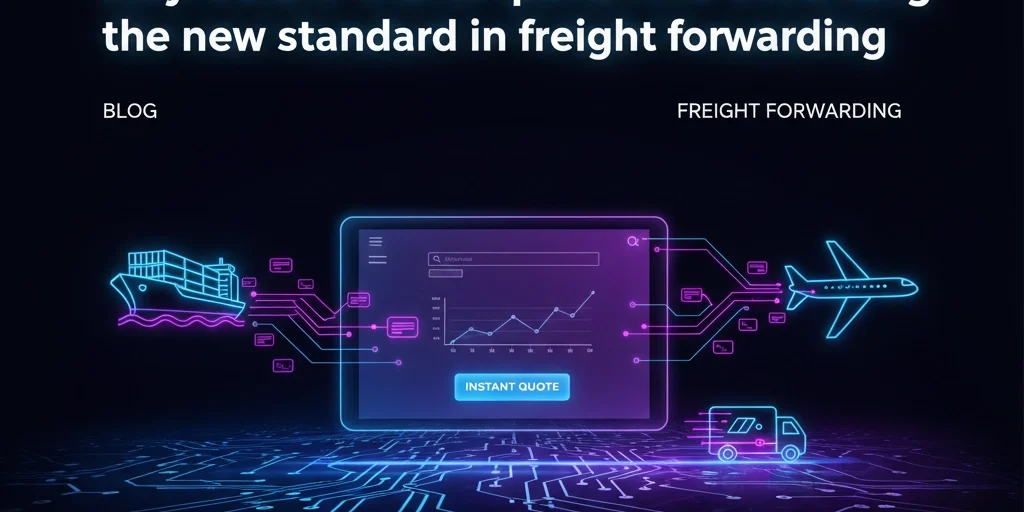
The freight forwarding industry is experiencing a digital revolution. What once took days of phone calls, emails, and manual calculations now happens in seconds with the click of a button. Instant online quotes are rapidly becoming the new standard, and companies that haven't adapted are finding themselves left behind.
This shift isn't just about convenience: it's about survival in an increasingly competitive marketplace where speed and transparency determine who wins business and who loses it.
The old way is dying fast
Traditional freight quoting has been a painful process for everyone involved. Shippers submit requests, then wait. And wait. Sometimes for days. Meanwhile, freight forwarders scramble through manual calculations, contact multiple carriers, and piece together complex pricing structures.
The numbers tell the story. Freight forwarders using manual processes spend an average of 57 hours per quote: from initial client inquiry to final quote delivery. Individual quotes can take anywhere from 23 to 141 hours to complete. That's not just inefficient; it's business suicide in today's fast-paced world.
Major industry players have recognized this reality. Three of the world's largest container lines: Hapag-Lloyd, CMA CGM, and Maersk: now offer instant quoting and booking through their digital platforms. They understand that instant quoting isn't a nice-to-have feature anymore; it's table stakes.

Speed isn't everything, but it's close
When customers can get accurate freight quotes in 15 seconds instead of 15 hours, the game changes completely. But speed alone isn't driving this transformation: it's what speed enables.
Instant quotes allow businesses to make real-time decisions. Sales teams can price products during customer calls. Procurement departments can evaluate suppliers without delays. Supply chain managers can adjust logistics plans on the fly.
This responsiveness creates a competitive advantage that compounds over time. Companies using instant quote systems can pursue opportunities that slower competitors miss entirely.
Workflow transformation changes everything
The operational impact goes beyond just faster quotes. Maersk's traditional offline quoting process involved 13 separate steps, including multiple rounds of communication and paperwork. Their instant booking system reduces this to just 5 online steps.
This isn't just about cutting time: it's about eliminating error-prone handoffs and reducing the complexity that creates delays and mistakes. When quotes are generated automatically based on real-time data, accuracy improves dramatically.
For freight forwarders, this workflow transformation means they can handle more business without hiring more staff. The technology scales their capabilities without scaling their costs.

Customer expectations have evolved
Today's business customers expect digital experiences that match what they get in other industries. They can book flights instantly, trade stocks electronically, and get ride-share quotes in seconds. Why should freight quotes be any different?
The answer is: they shouldn't be, and increasingly they aren't.
Customer service begins the moment someone requests a quote. The faster you can respond with accurate pricing, the faster a prospect becomes a paying customer. Delays don't just frustrate customers: they lose business to competitors who can move faster.
Instant online quoting also enhances transparency. Customers can see detailed breakdowns of shipping costs, understand what they're paying for, and compare options easily. This transparency builds trust and reduces the back-and-forth negotiations that slow down the sales process.
Technology is finally catching up
The freight forwarding industry has been notoriously slow to adopt new technology. While other industries embraced digital transformation years ago, freight forwarding stuck with manual processes, phone calls, and email chains.
That's changing rapidly. Companies like C.H. Robinson are investing billions in technology infrastructure: $1 billion over five years in Robinson's case: to build the digital capabilities their customers demand.
Modern quoting platforms integrate with carrier systems, customs databases, and routing optimization tools to deliver accurate pricing that accounts for all variables: weight, dimensions, destination, service level, customs requirements, and current capacity constraints.

Benefits extend across the supply chain
The advantages of instant online quoting create value for every stakeholder in the shipping process.
For shippers, instant quotes enable better decision-making. Small and medium-sized businesses can quickly price goods during sales calls, making them more competitive. Companies with variable supply chain needs can evaluate options without delays. The ability to see pricing instantly allows for better planning and budgeting.
For freight forwarders, digital quoting systems reduce operational costs while improving service quality. They can compare rates across multiple carriers quickly, find the best options for their customers, and provide value-added services that differentiate them from basic booking platforms.
For carriers, instant quoting systems help optimize capacity utilization and improve revenue management. They can adjust pricing dynamically based on demand and fill space more efficiently.
The competitive landscape is shifting
Early adopters of instant quoting technology gained significant competitive advantages. But as the technology becomes more widespread, it's becoming a basic requirement rather than a differentiator.
Large freight forwarders like Agility and Kuehne + Nagel have already implemented instant quoting systems. They recognize that digital tools for direct booking represent both an opportunity to provide better service and a threat if shipping lines bypass forwarders entirely.
This creates pressure throughout the industry. Companies that don't offer instant quotes find themselves at a severe disadvantage when competing for business, especially with customers who have experienced the benefits of instant pricing.

What to look for in instant quoting systems
Not all instant quote systems are created equal. The best platforms offer several key features:
Real-time carrier integration ensures quotes reflect current rates and capacity. Systems that rely on outdated rate tables can provide quotes that aren't actually available when it's time to book.
Comprehensive cost calculations include all fees and surcharges upfront. Hidden costs that appear later in the process damage trust and create budget problems for customers.
Multiple service options allow customers to compare speed versus cost. Some shipments need next-day delivery; others can wait weeks for the lowest price.
Easy booking capabilities let customers move from quote to confirmed shipment without starting over. The best systems maintain quote validity and allow instant booking at quoted prices.
Transparent tracking and communication keep customers informed throughout the shipping process. This reduces support calls and builds confidence in the service.
The future is already here
Instant online quotes aren't the future of freight forwarding: they're the present. Companies still relying on manual quoting processes are competing with one hand tied behind their backs.
The question isn't whether to adopt instant quoting technology, but how quickly you can implement it and how well you can execute it. In an industry where speed and transparency increasingly determine success, instant quotes have become the baseline expectation for professional service.

At Zuluz Services, we understand that your time is valuable and your shipping decisions can't wait for outdated processes. Our instant quoting system delivers accurate pricing in seconds, not days, helping you make informed decisions when you need them most.
The freight forwarding industry has finally caught up with customer expectations. Companies that embrace this change will thrive. Those that resist will find themselves increasingly irrelevant in a world where instant has become the new standard.